Building Game Worlds to Understand Our Own: Reflecting on the Game Design and Development Program
Guest post by Nioshi Shah, Speculative Pedagogy Games Fellow at The Pedagogy Lab and PhD student at the University of California, Santa Barbara
As a sociology PhD student, I study how people use play to navigate isolation and find a sense of belonging by building alternative spaces. More specifically, I am interested in people’s relationship with different forms of playful spaces, the dynamics of moving through them, and how they ultimately make sense of these environments. But as a Speculative Pedagogy Games Fellow at the Pedagogy Lab, I don’t just observe these playful spaces from an academic distance – I get the opportunity to be a part of building them. Our project centers on translating dystopian and speculative stories into interactive, text-based games on platforms like Twine. By bridging theory with practical game design, I want to contribute to pedagogical experiences that help people make sense of their own realities by navigating alternative worlds. I combine these interests, almost experimentally: researching how bodies move through game worlds, and then actually using theories of game design to build pedagogical materials that facilitate that very sense and space-making.
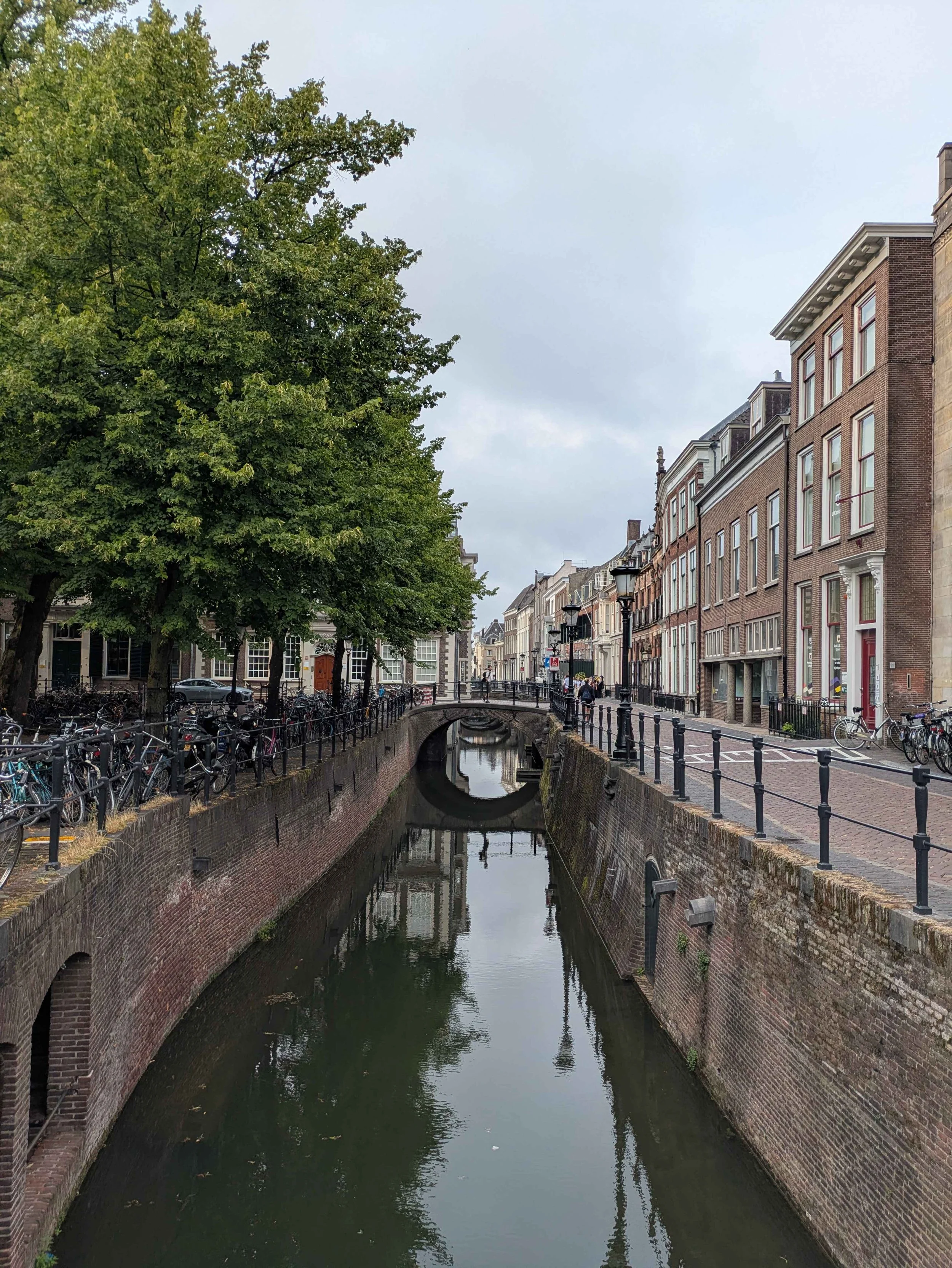
Utrecht, Netherlands. Courtesy of Nioshi Shah.
To deepen our work on speculative and dystopian game design, the Pedagogy Lab sponsored my trip to Utrecht University (Netherlands) to participate in their 2026 Summer School Game Design and Development program. I went with the goal to learn how to expand our text-based experiments into complex, spatial environments using the Unity game engine. I wanted to equip myself with the technical and collaborative skills required to build gameworlds that help us imagine otherwise.
The program was an intense one week hands-on experience, structured around teaching us the theory behind game design alongside practical development skills. We learned the architecture of Unity while simultaneously attending lectures on design, player motivation, and spacemaking. It offered a holistic view of what it actually takes to integrate theory into a game concept, and transform it through a team-building process to create a playable reality.
During the program, we were given a specific challenge: to work in teams to conceptualize and develop a playable, cozy, cooperative game by the end of the week. During this process, I experienced firsthand how quickly the momentum of game development could stray from intentional, pedagogical design. When we first sat down to brainstorm, our immediate instinct was to design something "fun." We quickly envisioned mechanics that were fast-paced, highly efficient, and driven by clear, satisfying win-and-lose conditions. Yet, alongside our coding sessions, we were attending lectures on what makes a game memorable, why certain mechanics motivate players, and how games with a distinct purpose stay with us longer than those built only for entertainment. It struck me that speculative design requires a different kind of intention. If we were genuinely trying to build a "cozy" game, a genre defined by its ability to offer comfort and respite, shouldn't the core mechanics actively teach players to slow down, rather than speed them up? We realized we had forgotten that cozy games are enjoyable precisely because they resist the urge to rush.
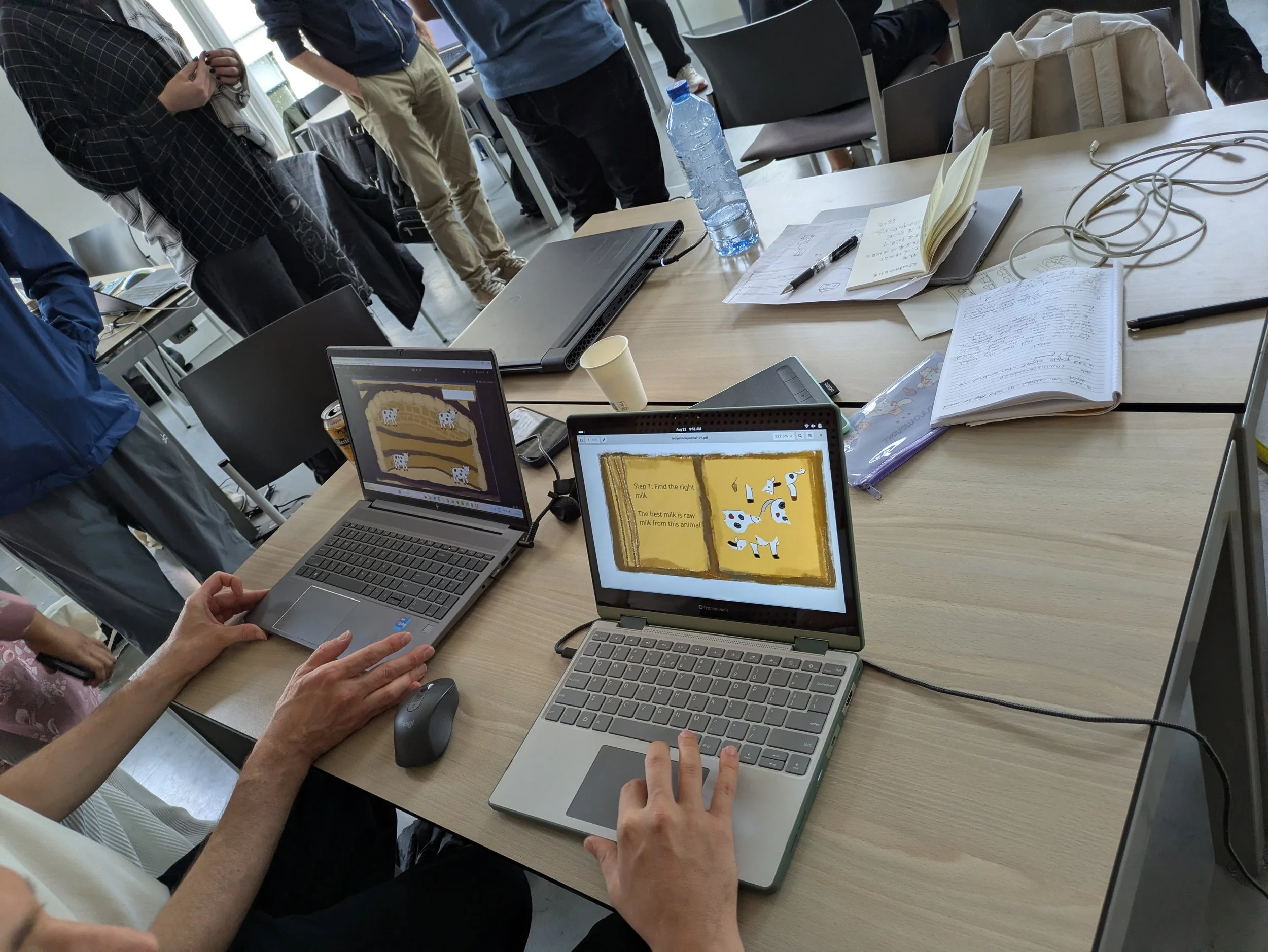
Program participants play-testing the game. Courtesy of Nioshi Shah.
To bridge this gap between our fast-paced instincts and our theoretical goals, we turned to paper prototyping. This involved charting out the entire game design on paper and physically playing it with makeshift pieces before writing any code. This newly learnt skill was incredibly revealing; it allowed us to see whether our theoretical design could actually be implemented, and whether the feeling we imagined would survive the development process.
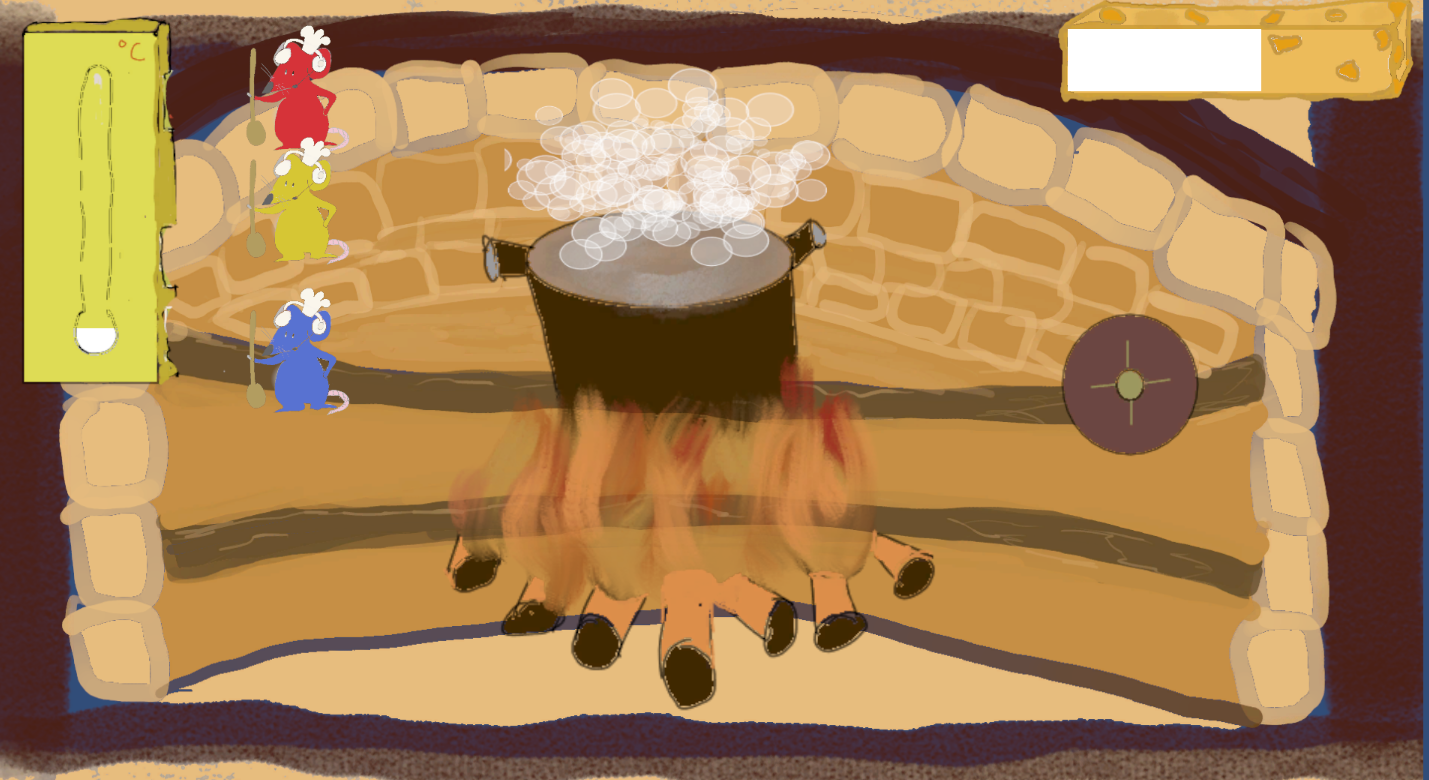
We ultimately designed a cooperative game where players navigate the world from the perspective of rats. To enforce our pedagogical goal of slowing down, I proposed a specific game mechanic: whenever a human walks by, the players momentarily lose the ability to move or advance. Instead of acting as a punishment, this forced pause becomes a space for connection. It gives players time to chat, strategize, disrupting the relentless rush to win.
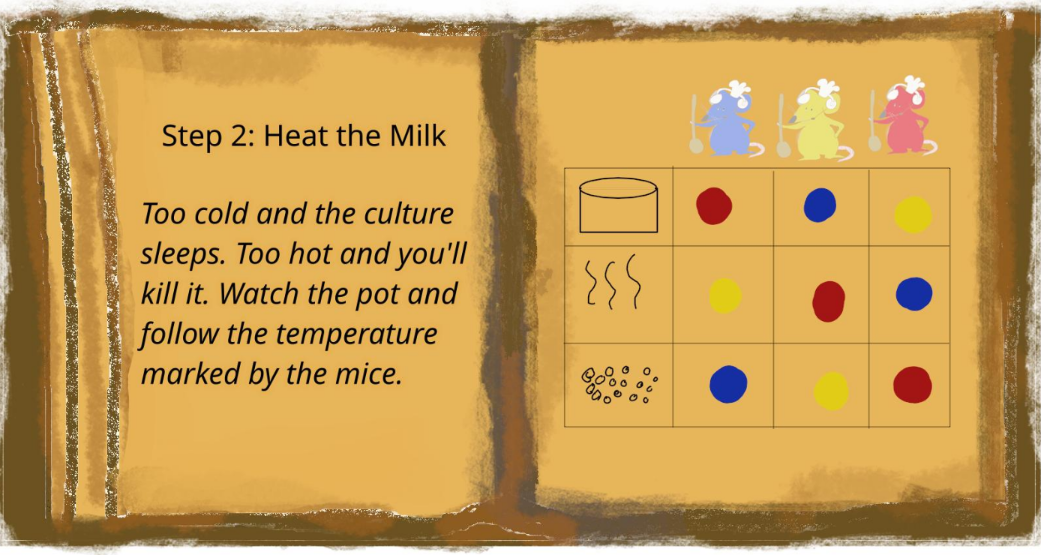
A task in Nioshi’s team’s game. Courtesy of Nioshi Shah.
This experience taught me how a focus on theory and pedagogy can influence the entire process of game making, giving the game a purpose beyond entertainment. Understanding critical theories of game design influences how we can imagine core game mechanics and push them from not just driving gameplay but rather embodying the underlying pedagogical purpose of the game itself. Speculative and dystopian literature directly impact the imagination of game mechanics, and these mechanics, in turn, are what make a game memorable.
I am returning to the Pedagogy Lab with a profound respect for the complexities of game design and development. I bring back not only practical technical skills in new engines but a reinforced conviction that digital world-building remains incomplete without intentional, theory-driven design. I am excited to apply these insights to our work, broadening our capacity to build playful, dystopian, and speculative environments that teach us how to better navigate our own realities.